

Dried fruit is not automatically keto or Paleo. Keto approaches focus heavily on carbohydrate intake, so the serving size and total carbohydrate line matter. Paleo approaches usually focus more on the ingredient list and degree of processing, but there is no single regulated Paleo standard. The right answer depends on the product, the portion, and the version of the diet you follow.
Keto and Paleo ask different questions
| Keto approach | Paleo approach | |
|---|---|---|
| Main question | How many grams of carbohydrate fit the day's plan | Do the ingredients and processing fit the chosen framework |
| What to read first | Serving size and total carbohydrate | Ingredient list |
| Added sugar | Relevant, but 0 grams added sugar does not mean low carbohydrate | Often avoided, though individual versions differ |
| Dried fruit | May be difficult to fit in larger portions because sugars and carbohydrates are concentrated | Often accepted when it is simply fruit, but portions still matter |
| Regulatory definition | No single FDA definition for a keto food | No single FDA definition for a Paleo food |
Why dried fruit feels different from fresh fruit
Drying removes much of the water. That makes the fruit smaller and easier to eat quickly, while the carbohydrates remain. A few bites of dried mango can represent more fruit than the same volume of fresh mango. This is why the package serving size is more useful than judging by handful alone.
The FDA requires Nutrition Facts values to be shown per labeled serving. If you eat two servings, you need to account for twice the listed amount. Check servings per container as well as serving size, especially on a small bag that looks like one portion.
Total carbohydrate, fiber, and net carbs
The Nutrition Facts panel lists total carbohydrate per serving. Dietary fiber and total sugars sit beneath that total. Some keto plans calculate net carbs by subtracting certain kinds of fiber or sugar alcohols, but net carbs is not a value defined on the standard FDA Nutrition Facts label. If you use a net-carb method, follow the method your clinician or plan recommends and start from the package's total carbohydrate line.
No added sugar does not mean low carb
Fruit naturally contains sugar. A package can accurately list 0 grams of added sugar and still contain total sugars and carbohydrates from the fruit itself. Added Sugars tells you whether sugars were added during processing. It does not describe the food's entire carbohydrate content.
This distinction is especially important with dried fruit. Look at all three lines together: total carbohydrate, total sugars, and added sugars.
What current Mavuno labels show
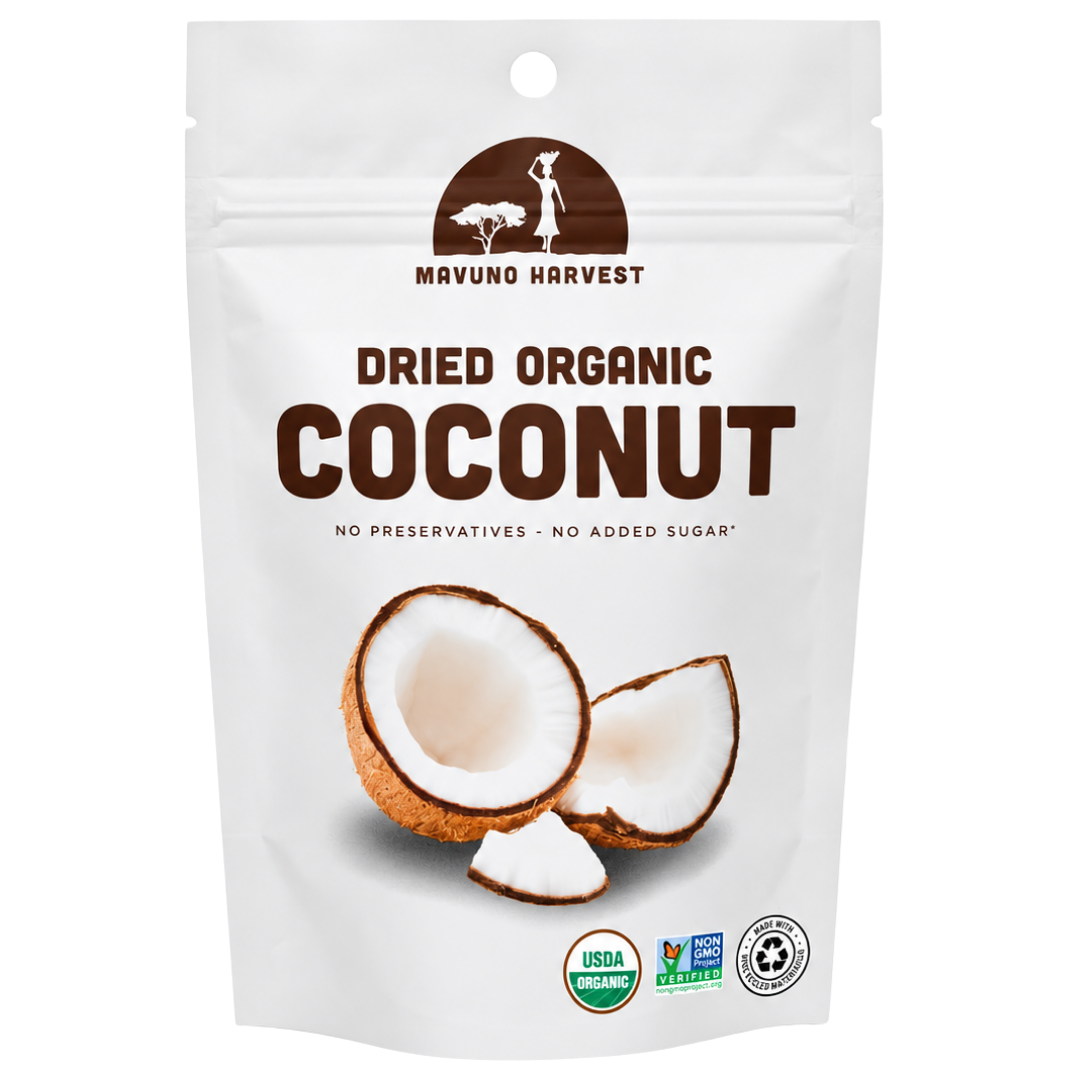
Current Mavuno package information illustrates why the individual label matters. A 2 ounce bag of Organic Dried Mango lists 34 grams of total carbohydrate, 6 grams of dietary fiber, and 0 grams of added sugar. A 2 ounce bag of Organic Dried Coconut lists 13 grams of total carbohydrate, 7 grams of dietary fiber, and 0 grams of added sugar. Those numbers describe the labeled serving. They do not make a universal claim that either product fits every keto plan.
Coconut and mango also behave differently in recipes. Coconut is rich and chewy, while mango brings concentrated fruit sweetness. Choose based on the label and intended portion, not on the broad category dried fruit.
A five-step label check
1. Find the serving size in grams and the number of servings in the package.
2. Read total carbohydrate per serving before looking at marketing phrases.
3. Check dietary fiber, total sugars, and added sugars as separate pieces of information.
4. Read the full ingredient list. One-ingredient fruit is different from chocolate-dipped fruit or a sweetened blend.
5. Decide the portion before eating from a large bag. Put the amount you plan to use in a bowl or recipe.
If you follow a keto approach
Treat dried fruit as a measured ingredient, not a free food. A small amount can add contrast to plain yogurt, a salad, or a nut mix, but the amount that fits depends on the rest of the day's carbohydrates and your individual plan. Nuts may be easier to portion into some keto patterns, but their labels still matter.
Anyone using a ketogenic diet to manage a medical condition should work with a qualified clinician. This article is general label-reading guidance, not medical advice.
If you follow a Paleo approach
Start with ingredients. Plain dried mango with one ingredient is different from fruit coated in chocolate or combined with other ingredients. Many Paleo frameworks accept unsweetened dried fruit, but some people set tighter limits on concentrated fruit or packaged snacks. There is no official seal that resolves those personal rules for you.
The most useful answer is on the package
A diet label can be a shortcut, but it should not replace the actual food label. Compare the serving size, total carbohydrate, added sugar, and ingredient list on the specific product. Browse Mavuno Harvest's organic dried fruit and organic roasted nuts to review the products individually.


